Tagline

Learning the Basics of Nutrition with Games

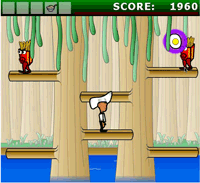
We designed a game that teaches children the basics of nutrition. The game is easy to understand and meaningful to the child.

How Our Games Teach Nutrition, the Food Pyramid and Healthy Eating

Our game teaches nutrition like you would teach math or reading. In math, you would first make sure the child understands numbers and what these numbers mean before you teach them to add. We take this same approach.

Game_meal Game_map_grains

Each section of the game is designed with the expertise of pediatric nutritionists, instructional designers, and educational game developers. The game takes the child through content in a very systematic, logical way. This ensures that learning objectives are being met prior to entering the next game level.

For your child to learn nutrition, he/she will need to have concepts introduced in small bites. Each section of the game is designed to reinforce and build upon the information previously introduced. But the most exciting part is that the child will make his/her own food choices throughout the game. This is how they will really learn the benefits of good food choices. Over time, the child will gain a solid understanding of nutrition that they will use for the rest of their lives.

Because each log-in is unique, the child’s individual progress is tracked. A roadmap shows the child exactly how far along they are within the game. The child can resume the game at the level where they left off.

This is the beauty of using an interactive game. It allows for repeated play, ensuring that the child will have time to digest content and absorb it. The combination of play, exploration and learning gives the child a fun, engaging experience. This sends the message that nutrition is fun.

Try our nutrition games! It's fun and free!

Learning Objectives

  1. Describe the Food Groups
    • List each of the food groups.
    • Describe why each food group is important.
    • List the number of servings for each food group.
  2. Describe the Grains Group
    • List why grains are important.
    • List several foods made with grains.
    • Plan a meal using foods from the grains group.
    • Select snacks using grains products.
  3. Describe Meats and Beans Group
    • Identify different types of meats and beans.
    • List why meats and beans are important.
    • Plan a meal using meats and/or beans.
  4. Describe the Milk Group
    • Identify different types of milk products.
    • List why milk products are important.
    • Plan a meal using milk products.
    • Select snacks using milk products.
  5. Describe the Fruits Group
    • Identify different types of fruits.
    • List why fruits are important.
    • Plan a meal using fruits.
    • Select snacks made with fruits.
  6. Describe the Vegetables Group
    • Identify different types of vegetables.
    • List why vegetables are important.
    • Plan a meal using vegetables.
    • Select snacks using vegetables.
  7. Describe Oils
    • Identify different types of oils.
    • List why some oils are important.
  8. Describe a Balanced Meal
    • Plan a meal containing foods from each of the food groups.
  9. Describe Calories
    • Describe why the body needs calories.
  10. Describe Activity
    • List why activity is important.
    • Identify the recommended amount of activity.

Game-ad1