Tagline

Kids_nutrition_newsletter

In this edition:

  • How much sugar are really in these fruit drinks
  • Why eating fruit is better than drinking your fruit
  • Paying attention to portions is important
  • Benefits of Water
  • Tips for healthy hydration
Newsletter Archives Boy-drink-juice Healthy-beverage-fact1 E_girl-drinking-soda Healthy-beverage-facts2 Girl-drinking-soda
Anne

Drinking your Calories

Anne Kolker MS, Registered Dietitian

Children should be encouraged to drink water in between meals, especially if your child is active or if it is a hot day. If you or your child is thirsty, this is a mild sign of dehydration. An easy way to check is to look into the ol’ potty bowl. Bright yellow urine can be a sign that you or your child needs more fluids (although some vitamins can also make urine bright yellow too).

The options for drinks seem to be at an all time high with energy and sport drinks, new flavored sodas, tropical fruit juices, fancy vitamin water, and even water with protein appealing to all ages. Sodas and sport drinks, however, can have as much as 13 teaspoons of added sugar. It is especially important to look at the serving size on the nutrition label. So if you quickly read that a beverage bottle says 80 calories, you may need to look again. For example, if the serving size sates 2.5 servings/bottle, you need to do the math. In this case, the 80 calories beverage actually contains 200 calories. Similarly, not all fruit juice is alike. Many do provide 100% juice but be careful of marketing. SunnyD® may look like orange juice and sell you on it’s 100% vitamin C, however it’s second ingredient is high fructose corn syrup as well as other ingredients not found in juice.

So what is a parent to do? Certainly, 100% fruit juice can be counted as a serving of fruit in a child’s diet. Just be careful of portion sizes. Offering OJ in a small glass (4- 6 oz) is great at breakfast but shouldn’t be the main choice of the day. Orange slices would be a great option, providing beneficial fiber and phytochemicals. If the soccer moms are bringing in sports drinks, you may need to be the one to point out that water is just fine. Sport drinks can be useful for the athlete who vigorously exercises for more than an hour, but isn’t necessarily needed for kids, teens, or adults. It is more important that you child is hydrated. Have your son or daughter drink water at least a half hour before his/her practice. Bring a water bottle to ensure he can drink during breaks in the game. Offering watermelon after the game is great as it contains 90% water. Finally, most adults and kids get plenty of protein (think cheese, milk, peanut butter, chicken, tofu, etc). Adding protein to a beverage just comes down to marketing again. Similarly, children consume plenty of vitamins in real food as well as fortified cereals and bread. Drinking vitamin water adds no real health benefit.

When you are out and about doing errands with the kids, it is quite convenient to just to purchase sodas, Slurpies ® and even a Jamba Juice® for you family. Again, it is all about portions. A 16 oz Jamba Juice ® Mango-A Go Go has 300 calories. Ask for an extra cup and split it up between your kids or just ask them to only fill it up half way (it is hard to stop halfway once it is in your cup). Even for yourself as you drop in to Starbucks for a 12 oz pick-me- upper café mocha (with whip cream of course) you’ll be drinking in 260 calories. Having young children have sips of your frosted mocha is not a great idea because caffeine can have more of an effect on children whose body weight is much less than an adults. Caffeine can cause upset stomachs and disrupt sleep.

The concern in our society today it that these sweetened beverages become the norm or daily beverage choice. Certainly, a decaffeinated soda at a pizza party once in awhile really won’t do that much harm to your child, however, if you go home and add in the ice cream that day, and the high sugar cereal from the morning and the hard candy sweet form a quick stop at the store, you have a lot of empty calories and sugar being consumed in just one day. Also, remember if you are drinking soda throughout the day, eventually your teenage will do so too (role modeling does have a huge impact).

Kids do need calories. For example a 10 year old girl may need 2,000 calories. Of course, if she is on the petite side or isn’t very active, she’ll need less calories.

Most of these sweet drinks provide very little nutrition. It can either fill the child up so he doesn’t want to eat later, missing out on other beneficial food like sliced fruit, or it can actual add unnecessary calories. For a child or even an adult needing to lose weight, this can be easy just by changing beverages. It is possible to fall back on good ol’ water. Many companies now offer flavored water such as lemon and raspberry. At home, add fresh mint or sliced oranges or cucumbers into a glass of ice water. For a special event, serve club soda with sliced lemons. The best benefit of water – there are zero calories.

Tips

  • There are flavored water or club soda with zero calories that are better options.
  • Start your young kids off right when they are little. Avoid offering children soda and punch.
  • Limit juice but do offer two cups a day of non-fat or 1% milk. It’s great for children older than two to provide calcium and vitamin D (whole milk is fine from ages 1 to 2).
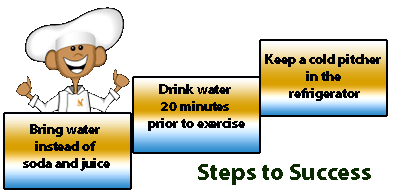
  • Do offer water through out the day
  • (try a keeping cold pitcher in the frig).
  • Add slices of lemon or squeeze a little bit of fresh orange juice to add some flavor.

If your child plays sports like volleyball, basketball or soccer, it is important to drink water 20 minutes prior to your practice or game. Their body sweats off fluid to keep cool. So, if your children are super active and/or it is really hot, remember to have them drink every 20 minutes or so including after their game.

To read more, see the article, "Children's Consumption Of Sugar-sweetened Beverages" in Science Daily

Another article: Too Many Sweetened Drinks, From Soda To Lemonade, Put Children At Risk For Obesity, Poor Nutrition, Study At Cornell Finds

Written on July 2008
Last updated: July 2009

Kids_healthy_chef_solus
Quick Links

Family Nutrition News
Read our recent articles

Daily Tips Calendar
Print and post fun daily tips.

Interactive Nutrition Tools
Free meal planner, BMI, and more!

Family Nutrition Blog
The latest news facts and tips.

Healthy_kids_fruit_salad

Printable Healthy Living Tips
Fun and easy tips - for the whole family.

Kids Fun Links

Explorers - Kids’ Page
Kids monthly healthy tips

Kids’ Nutrition Games

Back to Main Nutrition Articles Page

9nv-juiceplus-family-nutrition
Click here to learn how to give your family the nutrition it needs. Juice Plus+®
Rp_125x125